The WHO has defined the 5 Moments of Hand Hygiene since 2009. The poster is on the wall of almost every hospital. Yet field audits consistently show compliance of only 40–60%. Why?
What gets missed
Moment 1: Before touching a patient
Most often skipped when staff are "just checking the monitor" or "just touching the bedsheet." It is the perception of "not really touching the patient" that traps people.
Moment 2: Before a clean/aseptic procedure
Compliance here is usually high — but often done the wrong way (less than 20 seconds, or alcohol alone with no rinse after dirty contact).
Moment 3: After body-fluid exposure risk
Often performed, but gloves become an excuse to skip hand-washing afterwards. Yet gloves develop micro-tears during a procedure — leak rates run 4–12% for vinyl, lower for nitrile.
Moment 4: After touching a patient
Often skipped when staff are "rushing to the next patient." This is precisely the moment most likely to transmit pathogens between patients.
Moment 5: After touching patient surroundings
Most often skipped because it does not feel "dirty" — touching a side rail, IV pole, or bed control is treated as neutral. Research shows the opposite: a patient's surroundings are as contaminated as the patient.
What can be improved
- Access: a hand-rub dispenser at every point of contact — at least one per bed, plus room entry and exit
- Formulation: a hand rub that is not sticky or irritating — if staff avoid it because it dries the skin, compliance drops
- Direct audits: discreet observation is more accurate than self-report; this data is a basis for coaching, not punishment
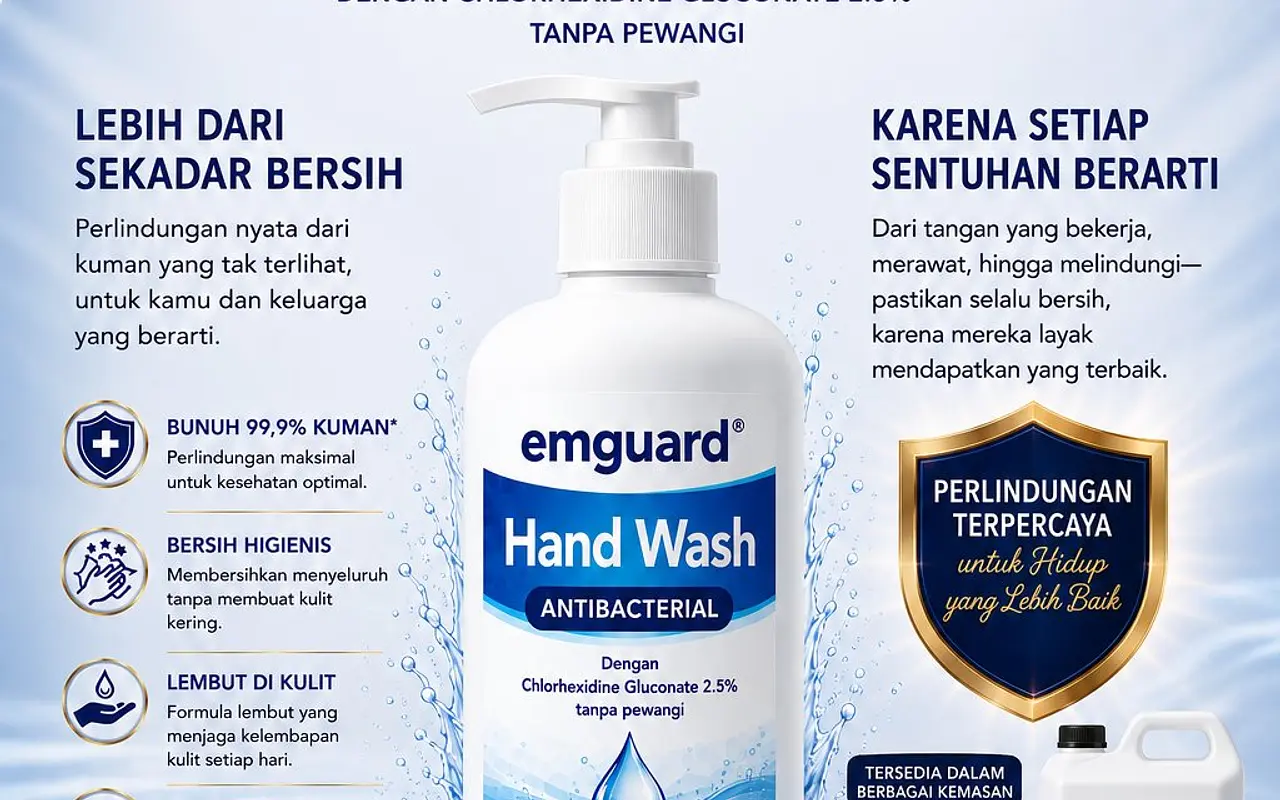
Emguard offers a range of hand rubs, hand washes, and hand scrubs designed for long shifts and sensitive skin. Our team also helps hospitals build audit kits and internal training — let's discuss via WhatsApp.