"Hand rub", "hand sanitizer", and "washing with soap and water" — three terms used interchangeably every day as if they meant the same thing. They don't. Each works differently, and choosing the wrong one is no small matter: it can mean hands assumed clean while germs still cling on, or staff skin damaged by the wrong method used over and over. Here is the difference, and a practical guide on when to use which.
Three methods, three mechanisms
Before deciding when to use what, understand that the three clean hands by different mechanisms:
- Washing with soap and water works mechanically. Soap lifts dirt, oil, and microbes off the skin, and running water rinses them away. Most germs are not killed — they are removed.
- Alcohol-based hand sanitizer works chemically. Alcohol (usually 70% ethanol) destroys microbial proteins and cell membranes within seconds, then evaporates leaving no residue.
- Chlorhexidine-based hand rub also works chemically, but differently: chlorhexidine gluconate (CHG) does not only kill on contact — it binds to the skin and stays active for hours afterward, an effect called residual activity.
This difference in mechanism is exactly what determines when each one excels.
"Hand rub" and "hand sanitizer" — are they the same?
In everyday conversation the two terms are almost always used interchangeably: both mean "a waterless hand cleaner". Broadly, that is not wrong. But if you compare the actual products, the distinction is not the name — it is the active ingredient and what it delivers:
- Alcohol-based — very fast action, broad spectrum, evaporates clean. The downside: once dry, there is no further protection.
- Chlorhexidine-based (CHG) — beyond killing on application, it leaves an active layer that suppresses germ growth for hours. Its formulation can also be water-based, making it gentler for very frequent use.
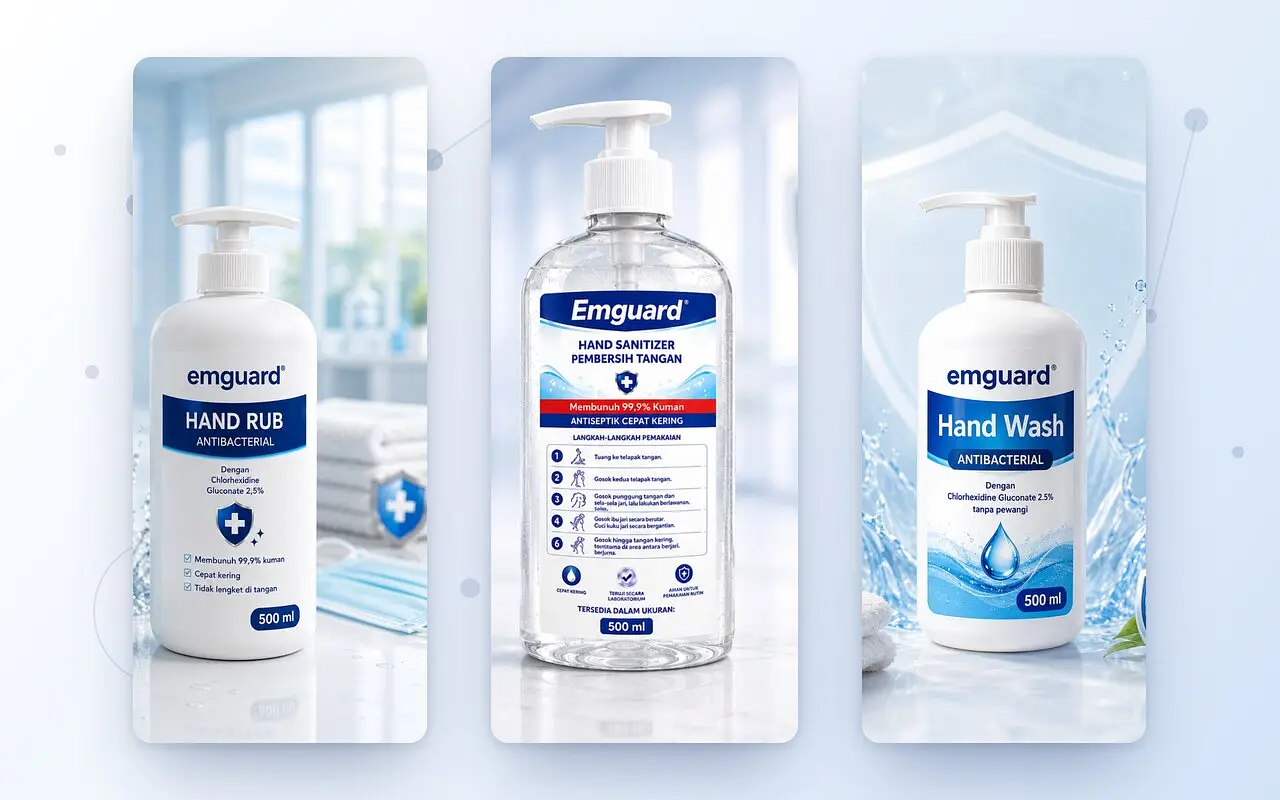
That is why the Emguard line separates the two into products with different roles: Hand Sanitizer based on 70% Ethanol per the WHO formulation for fast decontamination, and Hand Rub Antibacterial based on water-based 2.5% Chlorhexidine Gluconate with residual protection for up to 6 hours. The names may be similar; what matters is the formulation.
When you must wash with soap and water
There are situations where soap and water are not merely an option but a requirement — and cannot be replaced by a hand rub or sanitizer:
- When hands are visibly dirty or stained. Alcohol does not penetrate a layer of organic soil; on dirty hands its effectiveness collapses.
- After contact with blood or body fluids, even when gloves were worn.
- After using the toilet.
- When caring for patients with spore-forming infections such as Clostridioides difficile. Spores resist both alcohol and CHG — only mechanical rinsing with running water can remove them.
- During outbreaks such as norovirus, which is relatively resistant to alcohol.
- Before preparing or eating food.
The bottom line: if there is visible soil, or there are spores, hand rub and sanitizer are not enough. Hands must actually be washed.
When a hand rub or sanitizer is the better choice
On the other hand, for hands that are visibly clean, a waterless cleaner is often the better choice — and not only for convenience:
- Faster. A hand rub takes about 20–30 seconds; proper handwashing takes 40–60. On a busy day, that gap decides whether hand hygiene actually happens or gets skipped.
- No sink required. It can be used right at the patient's side — this is the heart of the 5 Moments of Hand Hygiene, where critical moments are often missed precisely because the sink is too far away.
- Gentler on skin when used very frequently. Surprising to many, but washing dozens of times a day with soap damages the skin barrier more than an emollient-containing hand rub does.
Hand rub (CHG) vs hand sanitizer (alcohol): which one
If hands are already clean and you are simply choosing between two waterless cleaners, consider what you need:
- Choose an alcohol-based hand sanitizer when you need fast, broad-spectrum germ kill for general situations, and you prefer the quick-drying feel with no sticky residue.
- Choose a CHG-based hand rub when you want lasting protection — germs kept suppressed for hours after application — or when skin is starting to get irritated and needs a gentler water-based formula.
Many healthcare facilities do not pick one; they stock both for different roles.
Quick guide: which situation, which method
- Hands visibly dirty, oily, or stained → soap and water.
- Before and after patient contact, hands visibly clean → hand rub or hand sanitizer.
- After using the toilet → soap and water.
- Moving between patients, far from a sink → hand rub or hand sanitizer.
- After contact with blood or body fluids → soap and water.
- Caring for patients with diarrhea or C. difficile infection → soap and water (alcohol does not kill spores).
- Need protection that lasts several hours → CHG-based hand rub.
- Need very fast decontamination with many repetitions → alcohol-based hand sanitizer.
The most common mistakes
- Using sanitizer on dirty hands. Sanitizer is designed for hands that are already clean, not as a replacement for washing.
- Using too little, or not letting it dry. A hand rub only works if there is enough to wet every surface of the hands and it is rubbed until completely dry — not wiped off or shaken dry.
- Over-washing without moisturizing. Constant washing with no skin care triggers dermatitis; alternating with an emollient-containing hand rub actually protects the skin.
- Assuming "hand rub" and "hand sanitizer" must be identical. As explained above, the active ingredient and residual effect can differ — check the label.
Conclusion
The question is not which method is "best", but which is right for the situation at hand. The three complement each other: visibly dirty hands demand soap and water; clean hands needing fast decontamination suit a hand rub or hand sanitizer; a need for residual protection points to CHG; a need for fast, broad-spectrum kill points to alcohol.
The Emguard hand hygiene line is built around exactly this split: Hand Sanitizer 70% Ethanol, Hand Rub Antibacterial 2.5% CHG, and Hand Wash Antibacterial as an antibacterial hand wash soap for daily use.
To understand exactly when hand hygiene is mandatory, also read 5 Moments of Hand Hygiene: The Ones Most Often Missed in Practice.
Need help building a hand hygiene standard for your facility? The Emguard team is ready to discuss via WhatsApp.