Bacteria
Strong activity against Gram-positive (S. aureus, MRSA) and Gram-negative (E. coli, K. pneumoniae) organisms. Effective against the flora that are leading causes of healthcare-associated infections.
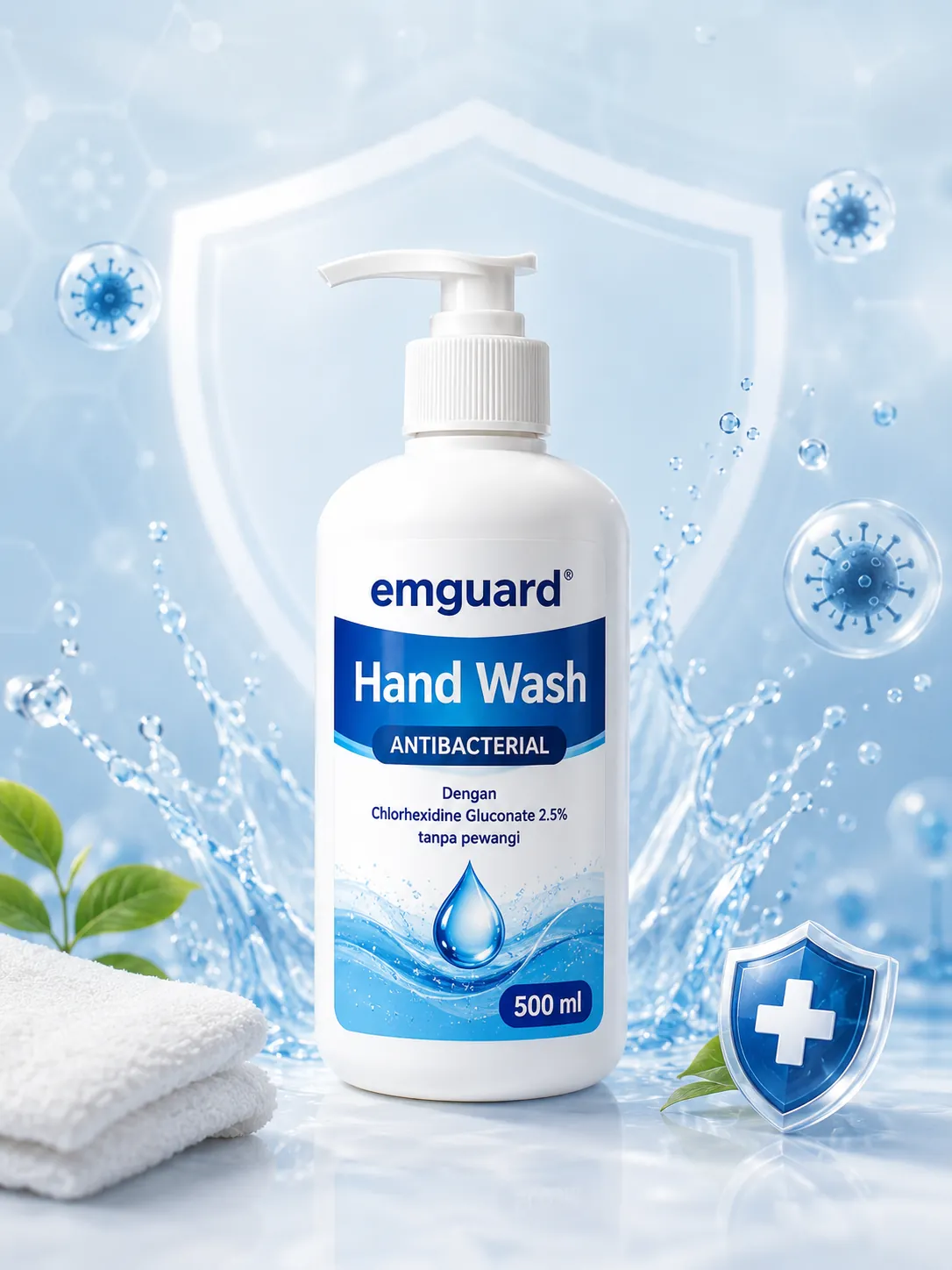
Modern epidemiological studies, from Semmelweis in Vienna in 1847 to the latest WHO meta-analyses, consistently show that washing hands with soap is the single most effective intervention for reducing the transmission of infection. EMGUARD® Hand Wash Antibacterial is designed as an upgrade over ordinary soap: the mechanical power of water and lather to lift away dirt and transient flora, plus Chlorhexidine Gluconate 2.5% that remains bound to the skin after rinsing — providing the residual protection that conventional soap lacks.
Unlike a hand sanitizer that works through purely chemical means, a hand wash combines three complementary mechanisms — its key advantage is the removal of organic soiling, which would otherwise deactivate many waterless antiseptics.
Mild surfactants (cocamidopropyl betaine, decyl glucoside) lower the surface tension of water and encapsulate dirt particles, skin oils, and transient flora — so all of it can be rinsed away.
During the 20–30 second rubbing process, positively charged Chlorhexidine binds to the negatively charged surfaces of bacterial cells, disrupts the membrane, and precipitates the cytoplasmic contents. Microbes die before they can even be rinsed away.
What makes a CHG hand wash special: some CHG molecules remain bound to the keratin proteins in the stratum corneum even after rinsing, providing a residual antimicrobial effect for the following 3–6 hours.
The formulation is enriched with glycerin and gentle emollients to prevent dryness from repeated use — essential for healthcare workers who wash their hands 30+ times per shift.
The combination of mechanical cleaning and the antimicrobial action of CHG delivers a far deeper reduction of hand flora than conventional triclosan-based antibacterial soaps.
Strong activity against Gram-positive (S. aureus, MRSA) and Gram-negative (E. coli, K. pneumoniae) organisms. Effective against the flora that are leading causes of healthcare-associated infections.
Washing hands with soap is the primary line of defence against enveloped viruses — the combination of mechanical rinsing and lipid membrane disruption is effective against SARS-CoV-2, Influenza, and other respiratory viruses.
When hands are contaminated with visible organic soiling — blood, mucus, faeces — a hand wash is the right choice. The mechanical action of rinsing also helps reduce the burden of C. difficile spores, which are not susceptible to alcohol-based antiseptics.
A technical summary ready to share with your IPC team, housekeeping, or facility procurement committee.
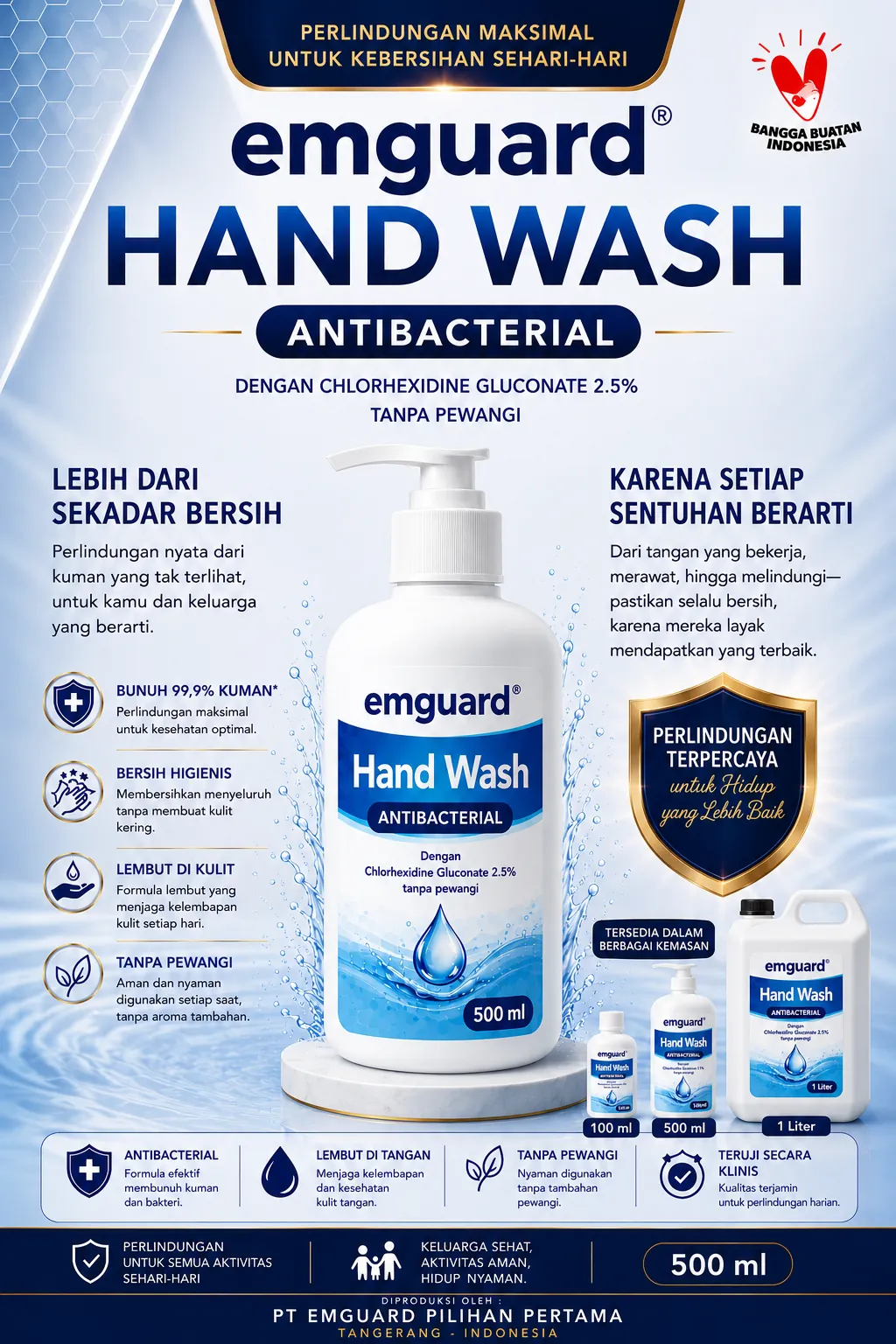
For two decades, antibacterial soaps in the consumer market were dominated by triclosan and triclocarban. In 2016, the United States FDA banned both from consumer soaps — the evidence of long-term safety and efficacy superiority was never enough to satisfy regulators. Hand washes that use triclosan are now a historical anomaly.
Chlorhexidine Gluconate 2.5% is the answer with a different body of clinical evidence. Used in surgery for more than 50 years, its safety and efficacy profile is validated in the Cochrane Review, WHO, and CDC literature. A rational choice for institutions that want an antibacterial soap that will remain relevant for the next 10 years.
A hand wash is the standard for sinks — where water flows and the habit of hand washing becomes a daily ritual.
Proper hand washing takes 40–60 seconds from start to finish. Most attempts fail not because of technique, but because of too short a duration — less than 15 seconds does not give the surfactants enough time to work.
Use warm (not hot) water to help dissolve oils and dirt. Hot water can actually strip away the skin's natural protective oils.
A single pump press delivers an effective dose. More does not mean more effective — what matters is coverage and duration.
Palm to palm, backs of the hands, between the fingers, fingertips, thumbs, and wrists. Make sure every surface is rubbed evenly — including the nail beds, which are often missed.
Rinse with running water until all soap residue is gone. Dry with a paper towel, then use the same towel to turn off the tap — preventing recontamination.
Details ready to be attached to procurement documents or your facility formulary.
EMGUARD® Hand Wash is formulated with high skin tolerance for repeated use 30+ times per day by healthcare workers.
Must not be swallowed. Avoid application on open wounds, the middle ear, or the mucous membranes of the eye.
If contact occurs, rinse with running water for 15 minutes. Consult a medical professional if irritation persists.
Hypersensitivity reactions to CHG are rare but have been documented. Discontinue use if persistent redness, itching, or swelling develops.
Use a closed dispenser system. Avoid repeatedly refilling an open bottle — a bacterial contamination risk that can actually grow biofilm within the soap.
A sink in a hospital witnesses tens of thousands of hand-washing cycles every week. The soap we formulate must work like a medical instrument that healthcare workers use without thinking — effective without drama, gentle without compromising efficacy.
Our technical team is ready to explain the CHG profile, recommend a closed dispenser system, and outline refill bundling packages that save up to 35% on your facility's logistics costs.