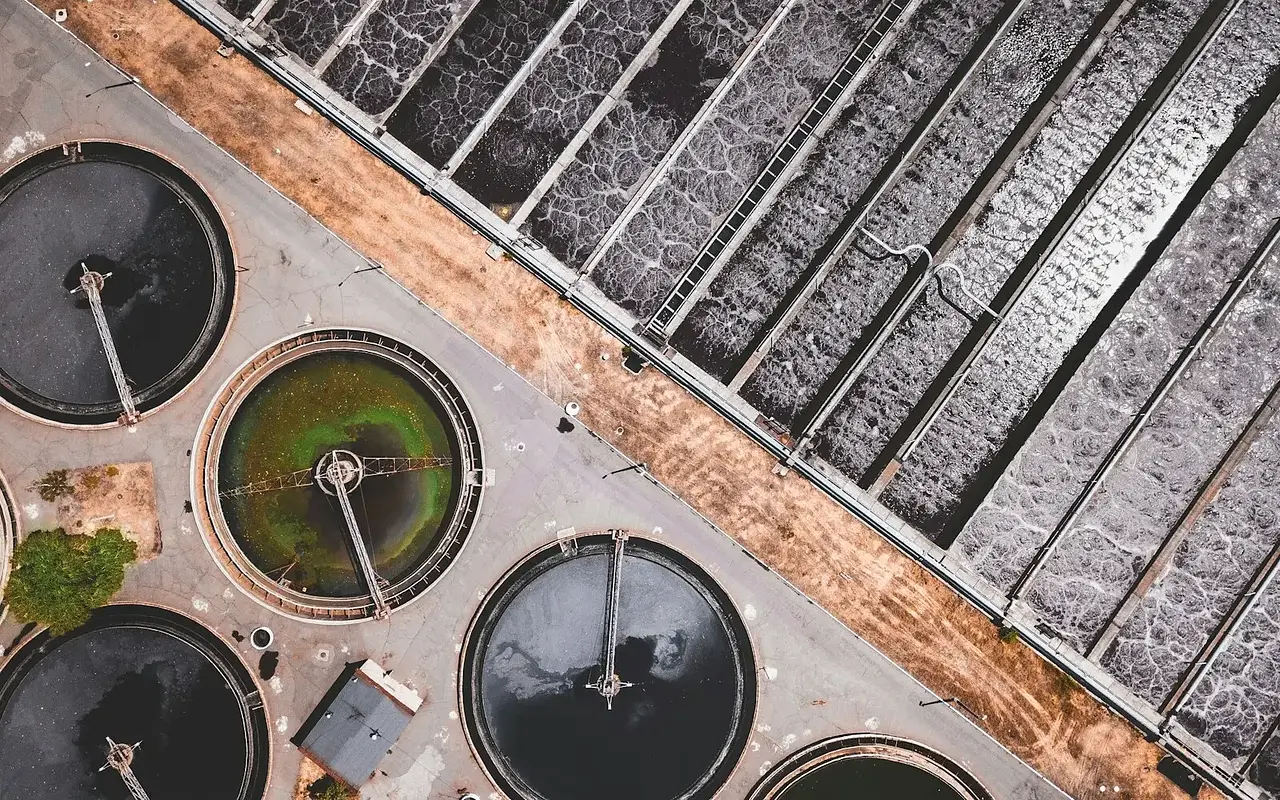
A hospital wastewater treatment plant (IPAL — Instalasi Pengolahan Air Limbah) isn't just a larger version of a domestic septic tank. The waste has unique characteristics — and if the IPAL isn't designed or operated properly, the impact stacks up: water-body pollution, fines from the Environmental Office, threats to the hospital's KARS accreditation, and damage to the institution's reputation.
This article explains the components of a modern hospital IPAL, the regulations that govern it, and the five most common operational problems — from the operator and facility manager's perspective.
Why hospital wastewater is different
Five characteristics that make hospital wastewater much more complex than ordinary domestic waste:
- Fluctuating volume. A 200-bed Type B hospital can generate 80–150 L/bed/day. Variation of 20–40% between morning (busy hours) and the middle of the night.
- High pathogen load. Blood, body fluids, patient secretions — containing Risk Group 2 and sometimes Group 3 pathogens. May not enter a water body without disinfection.
- Strong disinfectant residue. Chlorine, phenol, quaternary ammonium from OR, ICU, and lab cleaning — which ironically can kill the IPAL's own microbial culture.
- Residual antibiotics. Most antibiotics given to patients are excreted via urine/feces in active form. Accumulation at the IPAL can drive antibiotic resistance in the environment.
- Special waste streams. Radiology (if contrast agents are used), lab (chemical reagents), pharmacy (cytotoxics). These need separate pre-treatment before entering the main IPAL.
Because of these characteristics, a hospital IPAL almost always uses a combination: physical pre-treatment → biological (aerobic/anaerobic) → terminal disinfection. There are no shortcuts.
Indonesian regulations
Three principal regulations every healthcare facility must comply with in Indonesia:
- Minister of Environment and Forestry Reg 5/2014 on wastewater standards — for the healthcare sector: BOD₅ ≤30 mg/L, COD ≤80 mg/L, TSS ≤30 mg/L, pH 6–9, residual chlorine max 0.5 mg/L.
- Minister of Health Decree 1204/2004 on hospital environmental health requirements — covering IPAL design, sanitation, and hazardous-waste management.
- Minister of Environment Reg 5/2021 (environment-sector business licensing) — every IPAL must hold a Liquid Waste Discharge Permit (IPLC), renewed every 5 years.
Environmental Office audits and KARS accreditation (MFK working group) routinely check: daily parameter records (DO, pH), monthly effluent lab results from a KAN-accredited lab, and IPAL operations logbooks.
Typical components of a modern hospital IPAL
A common system in Indonesian Type B–A hospitals, targeting the PermenLHK 5/2014 effluent standard:
Stage 1: Physical pre-treatment
- Bar screen — catches gross solids (gauze, plastic, clumps).
- Grit chamber — settles out sand and inert solids.
- Equalization tank — smooths the load with 6–12 hours retention. Mandatory for a hospital — shock loads from laundry shifts, morning rounds, etc., need to be buffered.
Stage 2: Specialized pre-treatment (if applicable)
- Lab waste pit — lab reagent waste is treated separately; made safe before entering equalization.
- Cytotoxic waste pit — chemotherapy waste (if oncology services are present); chemical inactivation first.
- Grease trap — from the hospital kitchen, prevents fat from clogging pipes.
Stage 3: Biological treatment
- Aeration tank (activated sludge or MBBR) — aerobic microbes break down BOD/COD. 6–10 hours retention, DO target 2 mg/L. Use blowers or surface aerators.
- Secondary clarifier — microbial sludge settles, clear effluent rises. Part of the sludge is returned to aeration (RAS), part is wasted (WAS).
For more on biological technique, see How to Lower BOD and COD in Wastewater Biologically and Aerobic vs Anaerobic Bacteria.
Stage 4: Terminal disinfection
Before discharge, the effluent must be disinfected:
- Chlorination — Cl₂ gas, sodium hypochlorite, or calcium hypochlorite. Dose 3–10 mg/L, contact time 30 minutes. Cheap, effective. But residual chlorine must be ≤0.5 mg/L at the outlet.
- UV disinfection — suitable for modern hospitals; no chemical residue, but needs already-clear effluent (low TSS).
- Ozone — very effective but expensive, used at high-end hospitals.
Stage 5: Sludge handling
Sludge from the secondary clarifier is thickened, stabilized (digester or drying), and disposed of through a licensed third party (B3 hazardous waste). An active hospital IPAL produces 5–15 kg dry sludge per 100 beds per day.
Stage 6: Effluent monitoring
Before being released to a receiving water body, the effluent is sampled routinely (internal daily, monthly by an accredited lab). The outlet is usually equipped with a flow meter, sampling chamber, and an information board that must display the design capacity and target standards.
Five most common operational problems
1. Under-designed IPAL versus hospital expansion
A common pattern: an IPAL built when the hospital was 100 beds, while the hospital grew to 200–300 beds without an IPAL upgrade. The result: retention time drops, BOD/COD isn't fully processed, and effluent standards are exceeded.
Solution: review capacity every accreditation cycle (3–4 years), upgrade by adding parallel units (MBBR or additional biofilter) before the system is overwhelmed.
2. Disinfectants from OR/ICU killing the microbial culture
Very common: cleaning teams in OR/ICU pour concentrated chlorine waste into the drain. The high concentration reaches the aeration tank → most microbes die → BOD/COD jumps for days until the culture recovers.
Solution: train cleaning teams to dilute or neutralize before disposal. Separate OR drainage to a pre-treatment tank with neutralization (use Na₂SO₃ or Na₂S₂O₃ for dechlorination) before joining the main equalization.
3. Sludge bulking
Sludge doesn't settle properly in the clarifier — gets carried out with the effluent → high TSS, BOD/COD appears unchanged. Common cause: dominant filamentous bacteria (low DO, unbalanced F/M ratio).
Solution: monitor SVI (Sludge Volume Index, target 80–120 mL/g), weekly sludge microscopy, adjust DO to a stable 2 mg/L, optimize the return-sludge ratio.
4. Odor reaching patient areas or the surrounding environment
Odor (H₂S, ammonia) from an IPAL near patient wards or the pediatric area is a double problem: patient complaints + a sign of anaerobic conditions where it should be aerobic (DO has dropped).
Solution: check the aeration (broken blower? clogged diffuser?). Add chemical deodorizer as temporary mitigation while fixing the root cause. Cover the tank + add a biofilter for exhaust air.
5. Residual antibiotics and resistance genes
Recent research shows hospital IPALs are a hotspot for forming antibiotic resistance genes (ARGs) that escape into the environment. Conventional chlorination does not fully destroy ARGs.
Solution: consider an upgrade to ozonation or a membrane bioreactor (MBR) at high-volume hospitals. At a minimum: ensure full 30-minute chlorination contact time (not shortened).
Routine monitoring
Without data, the audit will fail. The minimum required:
FrequencyParametersPurpose DailypH, DO, temperature, flowInternal operations DailyEffluent residual chlorineStandard compliance WeeklyBOD/COD/TSS internal (test kit)Trend monitoring WeeklySVI sludge + microscopyCulture health MonthlyBOD/COD/TSS/total coliform at a KAN-accredited labMOEF report + KARS QuarterlyE. coli, fecal coliform, heavy metalsComprehensive auditRecord everything in a logbook + keep electronic copies. At audit time, the last 12 months of data must be accessible.
What Emguard offers for hospital IPALs
- Emguard Aerobic Bacteria — a Bacillus and Pseudomonas consortium for fast IPAL recovery after an upset (e.g. after a chlorine shock from OR/ICU), and for routine maintenance when MLSS drops below target.
- Emguard Anaerobic Bacteria — for hospitals operating an anaerobic digester (for biogas) or supplementary septic systems.
The Emguard team provides IPAL pre-assessment services: measuring waste characteristics, evaluating existing capacity, and recommending a specific dosing schedule. Reach out via WhatsApp below.
Summary
A good hospital IPAL is a system with complete components (physical pre-treatment → biological → disinfection → sludge handling → monitoring) operated by a team that understands microbiology and compliance. The five most common problems — undercapacity, disinfectant shock, sludge bulking, odor, ARGs — can all be mitigated with disciplined operation and incremental upgrades. The biggest investment isn't in technology, but in operator training and consistent monitoring.