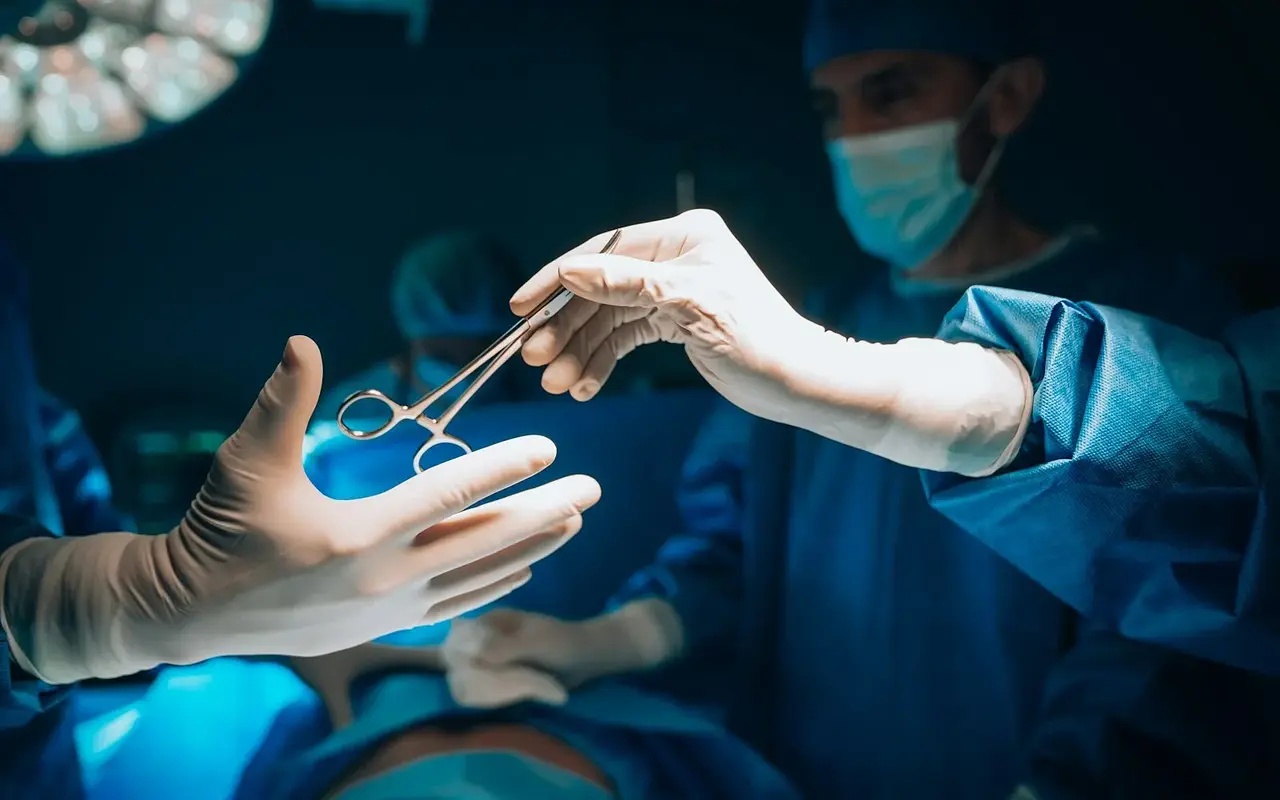
A surgical hand scrub isn't simply a longer hand wash. It's an antimicrobial procedure designed to reduce resident skin flora to the lowest level a sterile glove can hold back through 2–4 hours of surgery. Done badly — too quickly, in the wrong order, missing fingernail beds — and the microbial load under the glove will climb back to its pre-scrub level within 30 minutes.
This article explains the surgical hand scrub procedure consistent with WHO Guidelines on Hand Hygiene in Health Care (2009, still the international standard), with practical notes for hospitals in Indonesia.
Why a surgical scrub is different from routine hand hygiene
Routine hand hygiene (during the 5 Moments) targets transient flora — microbes just picked up from patients or surfaces. 20–30 seconds with a regular hand rub or hand wash is enough.
A surgical hand scrub targets two things:
- Transient flora — same as routine hand hygiene
- Resident flora — microbes that permanently live on the skin (especially Staphylococcus epidermidis, Cutibacterium acnes). Can't be fully eliminated, but can be suppressed to a low level and held there for several hours by a residual antimicrobial effect.
That residual effect is why a surgical scrub needs a specific antimicrobial — not just any soap. Chlorhexidine gluconate (CHG) 4% and povidone-iodine 7.5–10% are the two long-standing standards. For the modern alcohol-based approach, formulations contain 70–90% ethanol + 0.5–2% chlorhexidine or another active.
Two WHO-approved approaches
Approach 1: Traditional surgical hand wash (3–6 min)
The older standard, still in use across many Indonesian hospitals. Running water + antimicrobial scrub (CHG 4% or iodine). Contact time: 3–6 minutes for the first scrub of the day, 2–3 minutes for subsequent scrubs.
Strengths: very good results when done correctly, the protocol is well-known.
Weaknesses: high water consumption, more irritating to skin with repeated use (see the irritation article), longer.
Approach 2: Alcohol-based surgical hand rub / ABSHR (1.5–3 min)
WHO-preferred since 2009. An alcohol + residual antimicrobial formulation, applied to dry hands after an initial hand wash at the start of the session. No water or towel between procedures.
Strengths: faster, gentler on skin with the right emollients, water-saving, results equivalent or better than the traditional wash.
Weaknesses: requires the correct formulation (not any hand rub), more expensive per application.
Pre-scrub preparation
Check before starting — anything missing makes the scrub pointless:
- Nails — short, clean, no nail polish, no false nails, no gel or acrylic. WHO explicitly prohibits artificial nails in surgical areas because they're proven to harbor more Pseudomonas aeruginosa.
- Jewelry — remove everything: rings, watches, bracelets. Including a wedding band if it has a stone or seam.
- Attire — scrub suit, surgical mask, cap covering all hair.
- Sink — non-touch (knee or elbow operated), antimicrobial soap dispenser, single-use sterile nail brush (for the traditional method), sterile towels.
- Skin condition — if there are open wounds or severe dermatitis, don't scrub. Refer to a supervisor; surgical duties may need to be paused until healed.
Procedure 1: Traditional surgical hand wash (chlorhexidine 4%)
The widely-used version — 3 minutes for subsequent scrubs, 6 minutes for the first scrub of the day:
Step 1: Pre-wash (30 sec)
Open the tap with elbow/knee. Wet hands and arms to the elbow. Soap up, scrub all surfaces, rinse with water flowing from fingertips toward the elbow. The goal: remove gross soil and visible contamination.
Step 2: Nail cleaning (15 sec)
Use a single-use sterile nail brush or nail pick. Clean the subungual area (under the nail) of every finger. Often skipped — this is the #1 spot where microbes hide.
Step 3: Antimicrobial scrub — dominant hand first (90 sec)
Dispense 3–5 mL of CHG 4% from a non-touch dispenser. Scrub in order:
- Back-of-finger to back-of-finger (interlocking)
- Palm to back-of-hand (palm scrubbing the outside of the other hand)
- Between the fingers
- Fingertips into the palm (scrubbing nail tips against the other palm)
- Thumb rotated inside the grip of the other hand
- Wrist and forearm to the elbow (circular motion, from wrist up to elbow, never back down)
Each area at least 10 strokes, 90 seconds total for one hand.
Step 4: Apply to the non-dominant hand (90 sec)
Repeat Step 3 on the other hand. Total scrub time at this point: 3 minutes (or 6 minutes for the first scrub of the day).
Step 5: Rinse (30 sec)
Rinse with water flowing from fingertips toward the elbow. Never lower the hands below the elbow — water flows from the cleanest area (fingertips) to the less-clean area (elbow), not the other way. Keep hands above the elbow until they're dry.
Step 6: Drying with a sterile towel (60 sec)
Take a sterile towel from the pack. Dry by blotting (gentle pat), not rubbing. Start at the fingertips, then hand, then wrist, then forearm to the elbow. One side of the towel per hand — never share.
Step 7: Gowning + gloving (assistant)
After drying, keep hands above the waist while an assistant helps put on the sterile gown and sterile gloves (closed-glove technique).
Procedure 2: Alcohol-based surgical hand rub (ABSHR)
Faster — but only usable when hands are already visibly clean after an initial hand wash:
Preparation
Do a regular soap + water hand wash first (pre-scrub) to remove visible soil. Dry with a clean towel.
ABSHR application (1.5 min subsequent, 3 min first scrub)
Pump enough hand rub into the palm (usually 3–5 mL, enough to wet both hands and forearms).
- Right hand: spread the rub across the entire right palm and right forearm to the elbow. Keep wet for 60 seconds.
- Pump again, left hand: same for the left palm and left forearm to the elbow.
- Pump again: rub both palms together, then all hand surfaces in the same 6-step order as traditional (back of fingers, palm to back, between fingers, nail tips, thumb, wrist) — until the alcohol is completely dry.
Key: keep the surface wet for the specified time. If the alcohol evaporates in 30 seconds, a re-application is needed.
After ABSHR
Wait for the hands to be fully dry before gowning + gloving. Gloving over alcohol-wet hands = irritation + damaged gloves.
Comparison table
AspectTraditional ScrubABSHR Time (subsequent)3 min1.5 min Time (first of day)6 min3 min Water requiredYesOnly the initial pre-wash Long-term skin irritationHigherLower (with emollients) Effectiveness vs resident flora4–5 log reduction5–6 log reduction Residual effect (under glove)3–6 hours (CHG)2–4 hours (alcohol + CHG) WHO preferenceAcceptedRecommendedThe most common field mistakes
- Cutting the time. "The next case is already in" — a scrub cut from 3 minutes to 90 seconds voids the efficacy claim. Put a visible timer in the scrub area.
- Random order. Without a systematic order, the same area gets scrubbed twice while another is missed. Always start at the fingertips.
- Subungual ignored. The nail brush / pick is treated as optional — but the subungual area is a P. aeruginosa reservoir. Mandatory on first scrub of day, optional after.
- Hands below the elbow. While rinsing, drying, or waiting — hands above the elbow. If they drop, microbes from the elbow can drift back to the hands via residual water.
- Drying the fingertips with the same towel side as the elbow. Cross-contamination. The cleanliness is wasted.
- Using a regular towel for drying. A reusable towel = a microbial vector. Always use a single-use sterile towel from a sterile pack.
- Under-applying ABSHR. Alcohol evaporates quickly. If coverage isn't full or dries in <60 seconds, repeat.
- Nail polish / artificial nails. Often overlooked by female staff. An extra microbial reservoir, prohibited by WHO.
What Emguard provides
Emguard's surgical hand prep line:
- Hand Scrub Plain — an unscented variant for staff with fragrance sensitivity; chlorhexidine gluconate as the active for the traditional surgical scrub. Suitable for pre-surgical hand prep in the OR.
- Hand Scrub Floral — a variant with a light fragrance; same CHG active, easier to use for staff doing repeated scrubs.
- Hand Rub Antibacterial — alcohol-based formulation for ABSHR; 70% alcohol + chlorhexidine + emollients (glycerin) so repeated use stays non-irritating.
For hospitals transitioning from a traditional scrub to ABSHR, the Emguard team helps build training videos + standard scrub-room signage. Reach out via WhatsApp below.
Summary
A surgical hand scrub is a precision discipline: the right product, the full time, a systematic order, hands above the elbow, sterile drying. Since 2009 WHO has preferred ABSHR because it's faster, gentler, more water-efficient, and equally or more effective. But the best method is the one that's done consistently. Audit your surgical staff's scrub technique — not whether they do it, but how they do it.